Mold in the Kitchen: Under Sinks, Dishwashers, and Behind Cabinets
The kitchen feeds mold everything it needs: water, warmth, food scraps, and dark corners nobody looks into. A slow drip under the sink, a dishwasher hose working loose, or a fridge water line sweating behind the cabinet can keep wood and drywall damp for months before anyone notices. Here is where kitchen mold hides, how to spot it early, and what to do once you find it.
The kitchen gives mold everything it wants: water on tap, warmth from cooking, crumbs and grease for food, and dark corners nobody looks into. A slow drip under the sink, a dishwasher hose working loose, or a fridge line sweating behind the cabinet can keep wood and drywall damp for months before anyone notices a smell.
By the time you see the spots, the moisture has usually been there a while. The good news is that kitchen mold follows a short list of hiding places, and checking them takes ten minutes a month. Here is where it hides, what it looks like, and what to do once you find it.
Under the Sink: The Dampest Spot in the Kitchen
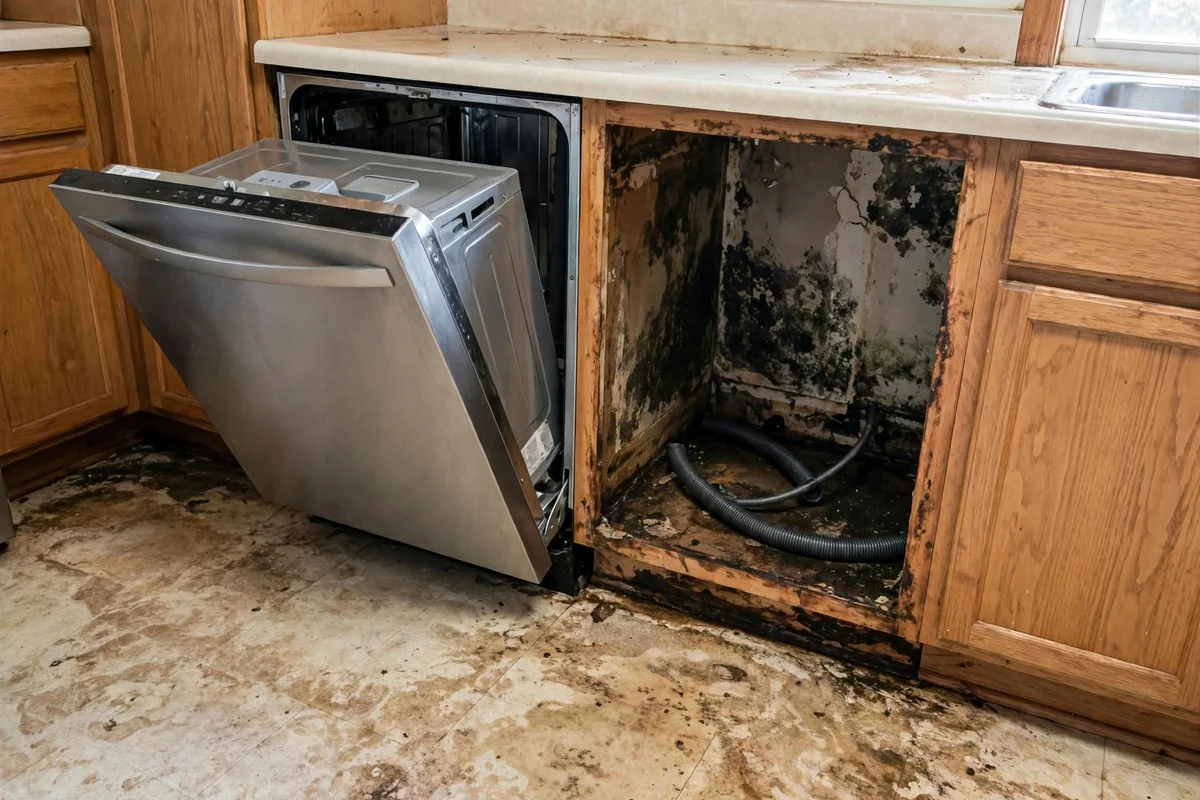
Open the cabinet under the sink and look at the base, the back panel, and the pipes. This is the dampest spot in the kitchen: the drain trap drips, supply lines sweat, and cleaning bottles hide the stains. Dark speckles on the wood, a soft or swollen cabinet base, and a musty smell when you open the doors all point to growth that has been there a while.
Run your hand along the pipes while the tap runs. A joint that feels wet, a trap that drips once every few seconds, or a supply line with green crust around the connection all feed the dampness. Tighten what you can, put a bucket under the drip, and dry the cabinet with a fan before you scrub anything. The mold comes back until the water stops.
A leak that has soaked the cabinet base and the wall behind it is past a wipe-down. Our water damage and mold removal service takes out the soaked material and dries the wall before the growth spreads.
Behind the Dishwasher: The Leak You Never See
The dishwasher hides its leaks behind a steel box. The supply hose, the drain hose, and the door seal can each weep a little at a time, soaking the floor and the wall behind the machine while the kitchen looks fine. The first sign is often a musty smell near the dishwasher, or a floorboard that feels soft at the edge.
Pull the machine out once a year and look at the floor and the wall behind it. Dark stains, swollen baseboards, and a damp smell mean the leak has been running for a while. Check the hoses for cracks and the door seal for gaps, and replace anything that looks worn before it splits. A hose that bursts while you are out floods the kitchen in minutes, so a worn hose is worth replacing on the spot.
If a hose does burst, the drying steps are the same as after any flood. Our guide to what to do after a flood to prevent mold covers the first hours, and they matter just as much in a kitchen as in a basement.
Inside Cabinets and Behind the Backsplash
Mold does not stop at the sink cabinet. Wall cabinets above the stove collect steam and grease, the cabinet under the coffee maker stays damp, and the gap behind the backsplash traps moisture from cooking and washing up. Open the cabinets and look at the back panels and the undersides of shelves, especially in corners where the air never moves.
Particleboard is the weak point. It soaks up water like a sponge, swells, and grows mold through its core, so a cabinet that has gone soft usually needs its boards replaced rather than cleaned. Solid wood shelves and hard surfaces can be scrubbed with soap and water, dried fully, and kept. The test is simple: if the board feels soft or crumbles at the edge, it comes out.
The backsplash needs the same care as bathroom tile. Our guide to cleaning mold from grout without damaging tile shows how to scrub grout lines without cracking them, and the same steps work on a kitchen backsplash.
Around the Fridge: Water Lines, Drip Pans, and Ice Makers
A fridge with a water line or ice maker has three quiet leak points: the connection at the wall, the line running behind the fridge, and the drip pan underneath. Pull the fridge out and look at the wall and the floor behind it. Dark stains on the baseboard, a warped floorboard, or a smell when the fridge runs all point to a slow leak.
Empty and wipe the drip pan now and then, and check the water line for kinks or cracks when you move the fridge. A plastic line that has gone brittle will split sooner or later, and a braided steel line lasts far longer in the same spot. If the floor under the fridge feels soft, stop and call a professional. Soft flooring means the moisture has reached the subfloor.
Signs of Kitchen Mold Worth Checking Every Month
A monthly check takes ten minutes and catches most kitchen mold early. Open every under-sink cabinet, look at the base and back panel, sniff for a musty smell, and press the wood to see if it feels soft. Run the dishwasher and the tap while you watch the pipes, and look at the floor around the fridge and the dishwasher for dark edges or swelling.
The signs to act on are a smell that stays in one spot, spots that return after cleaning, wood that feels soft, and any drip you cannot trace. One spot on a hard surface is a cleaning job. Spots that keep coming back, or growth that has reached the wall behind the cabinets, mean the moisture is still feeding it, and that is the point to get help.
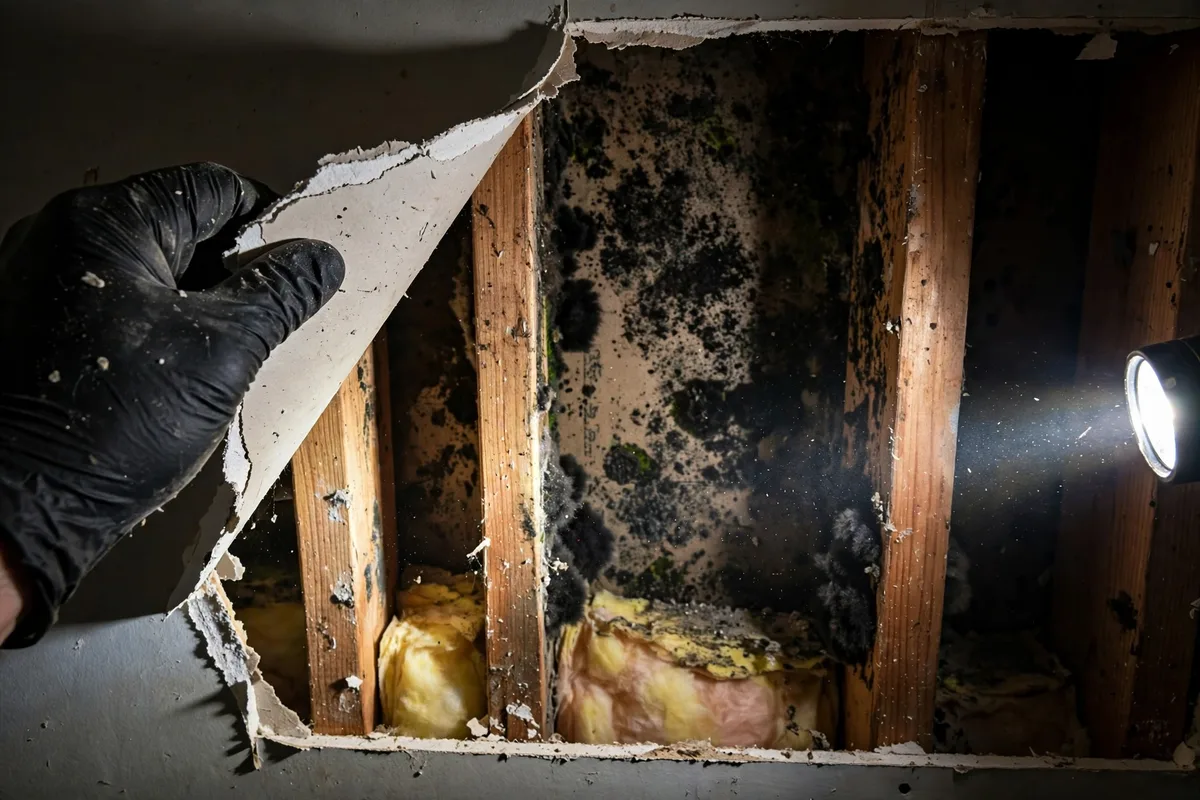
Growth that reaches the wall behind the cabinets is often bigger than it looks from the front. Our guide to mold hiding behind walls explains how to read the signs before anyone opens anything up.
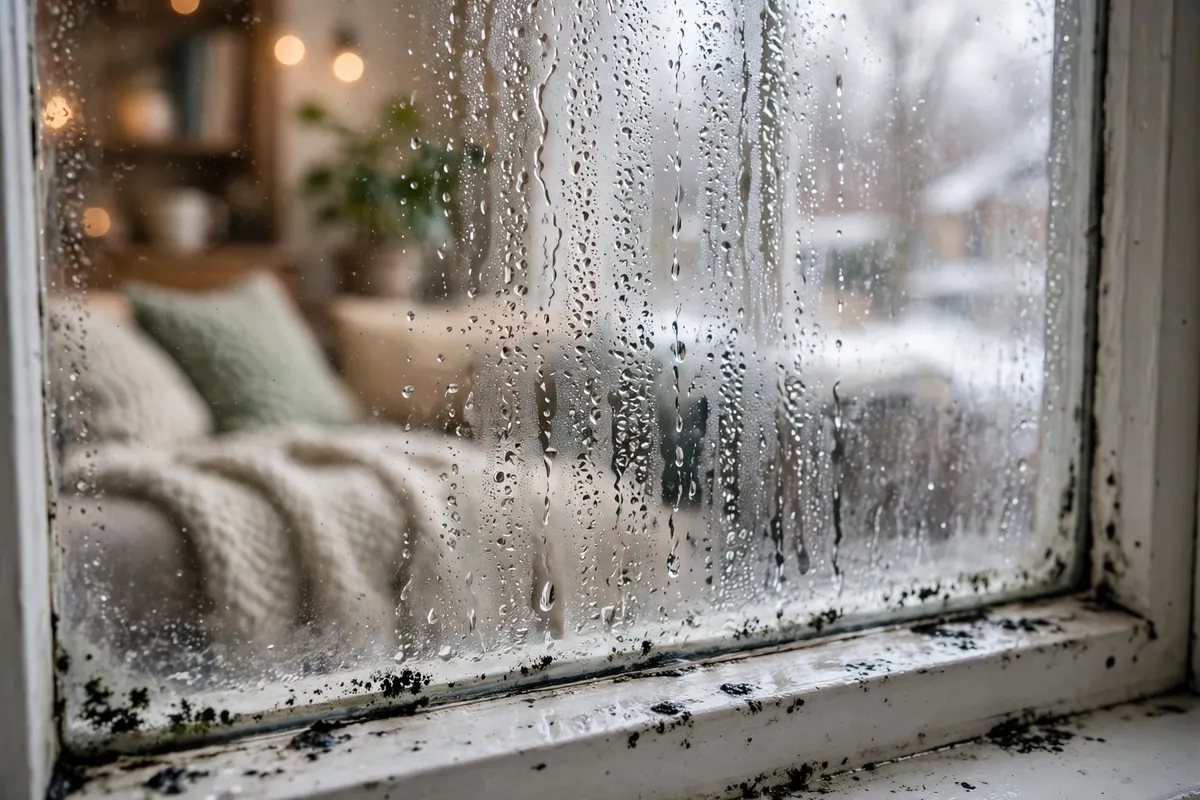
Steam from cooking adds moisture to the whole kitchen, so keeping indoor humidity in check matters as much as fixing drips. Run the exhaust fan while you cook and let the room air out after.
What You Can Clean Yourself and When to Call a Pro
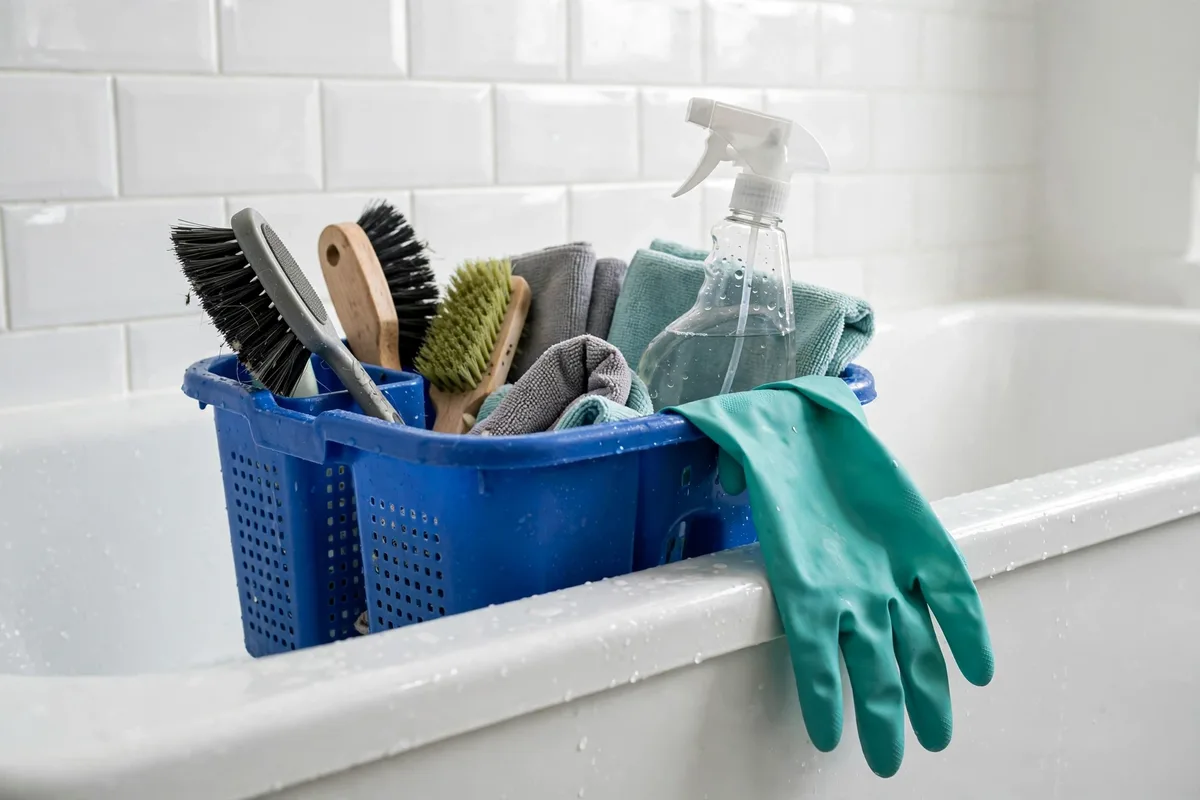
A small patch on a hard surface, tile, glass, the inside of a metal sink cabinet, is a cleaning job. Fix the leak first, then scrub with soap and water while wearing gloves and a mask, and dry the area fully with a fan. If the patch dries out and stays dry, you have solved it.
Call a professional when the growth covers a wide area, when it has soaked into particleboard or drywall, when it sits inside the wall behind the cabinets, or when it keeps returning after cleaning. A crew with containment and proper equipment removes the damaged material, dries the wall and floor, and checks the moisture before anything goes back. Trying to scrub growth out of soaked drywall only spreads spores through the kitchen.
If you are not sure how far the moisture reached, a professional mold inspection maps the damp spots behind the cabinets and the wall, so the repair covers the whole problem instead of the part you can see.
Growth that has been blowing spores through the kitchen for months can reach the ductwork too, so the crew checks whether mold in air ducts needs attention as part of the same job.
Keeping the Kitchen Dry After the Mold Is Gone
The job is not done when the spots are gone. It is done when the kitchen stays dry. Fix every drip the week you notice it, replace worn hoses before they split, and run the exhaust fan every time you cook. Wipe up standing water around the sink instead of letting it sit, and keep the cabinet under the sink clear enough that you can see the pipes.
Check the hiding places every month: under the sink, behind the dishwasher, around the fridge line, and along the backsplash. A kitchen you can see into is a kitchen where mold has nowhere to hide, and the ten-minute check is what keeps a small drip from turning into a cabinet replacement.
Kitchen mold is a plumbing problem first and a cleaning problem second. Fix the drip, dry the wood, and check the hiding places every month, and the kitchen stays a place to cook in rather than a place mold calls home.