Can You Stay in Your Home During Mold Remediation?
Most remediation jobs let you stay in your home while the crew works, because the work area gets sealed off from the rooms you live in. That answer changes when the growth is widespread, when someone in the house has breathing trouble, or when the work touches bedrooms and bathrooms you cannot avoid. Here is how to decide, what to expect day by day, and the clearance check that says it is safe to use every room again.
The crew is coming on Monday, plastic sheeting and all, and the first question most families ask is the simplest one: do we have to leave? For most jobs, the answer is no. The work area gets sealed off from the rest of the house, the air inside it gets filtered, and daily life goes on in the other rooms.
That said, staying is not right for every job or every household. The size of the growth, where it sits, and who lives in the house all change the answer. Here is how to decide, and what to expect either way.
The Short Answer: Usually, Yes
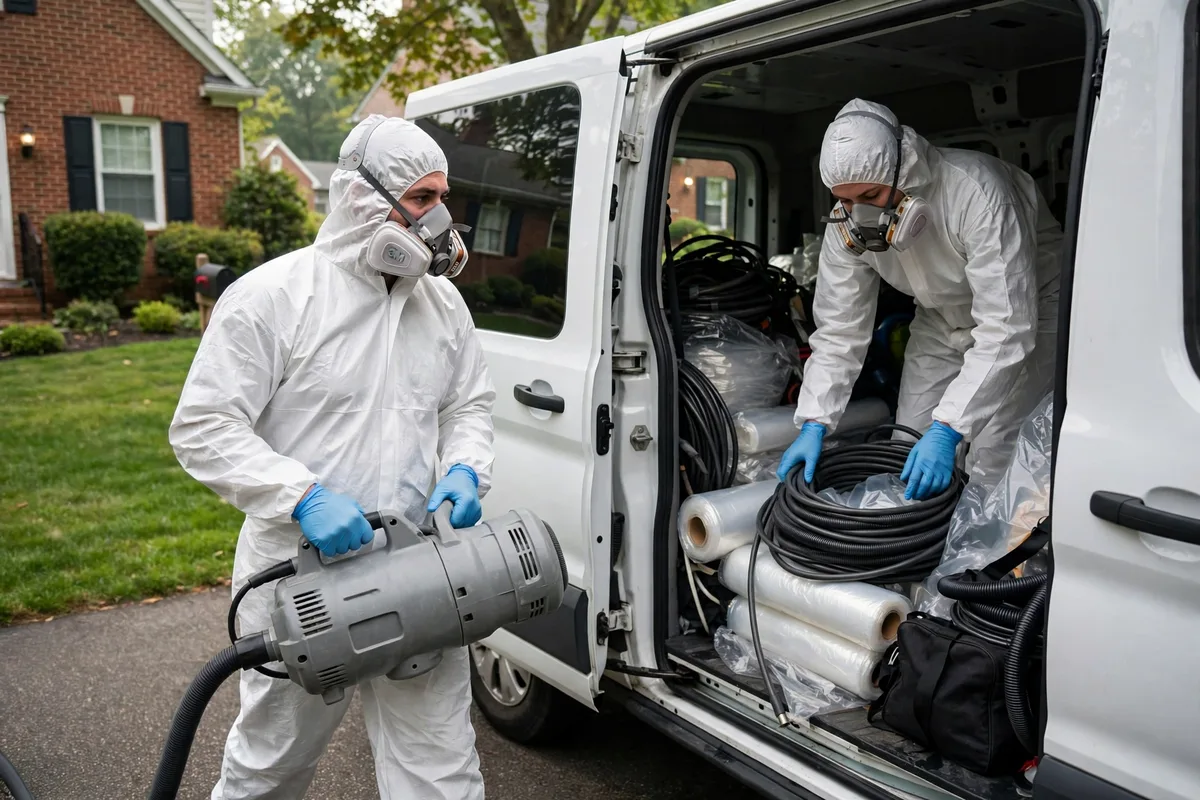
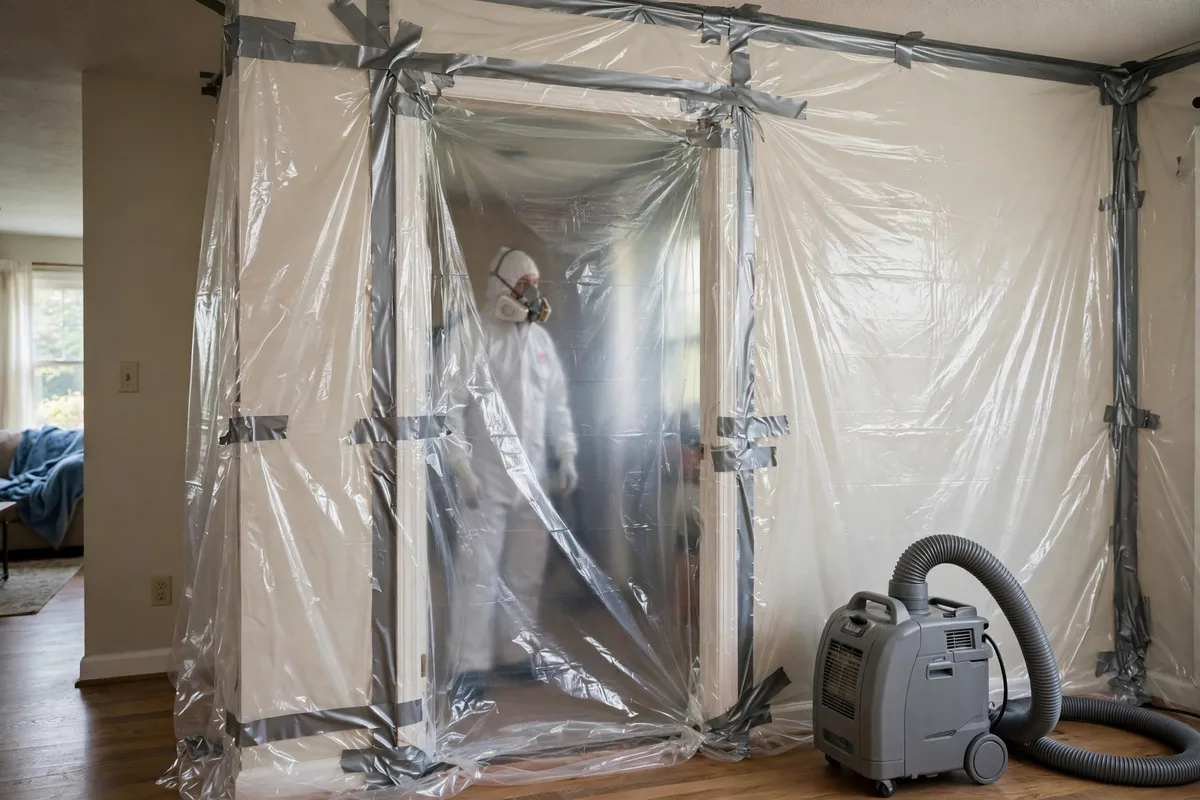
In most cases, yes. A standard job seals the affected room or rooms with plastic sheeting taped to the walls, ceiling, and floor, with a zippered opening the crew uses to come and go. An air filtration machine pulls air through a filter and pushes it outside, so the air inside the contained space stays separate from the air in the rest of the house. You live around the sealed rooms, not inside them.
The crew sets up the barriers before any removal starts, and the barriers stay up until the room is cleaned and dried. During that time you can cook, sleep, and work in the rest of the house as usual. The only rooms you avoid are the ones behind the sheeting. If the job covers a single bathroom or one corner of the basement, most families barely notice the crew is there.
A typical job runs a few days from setup to clearance, and our guide to how long remediation usually takes walks through what happens on each of those days.
When Leaving the House Is the Safer Choice
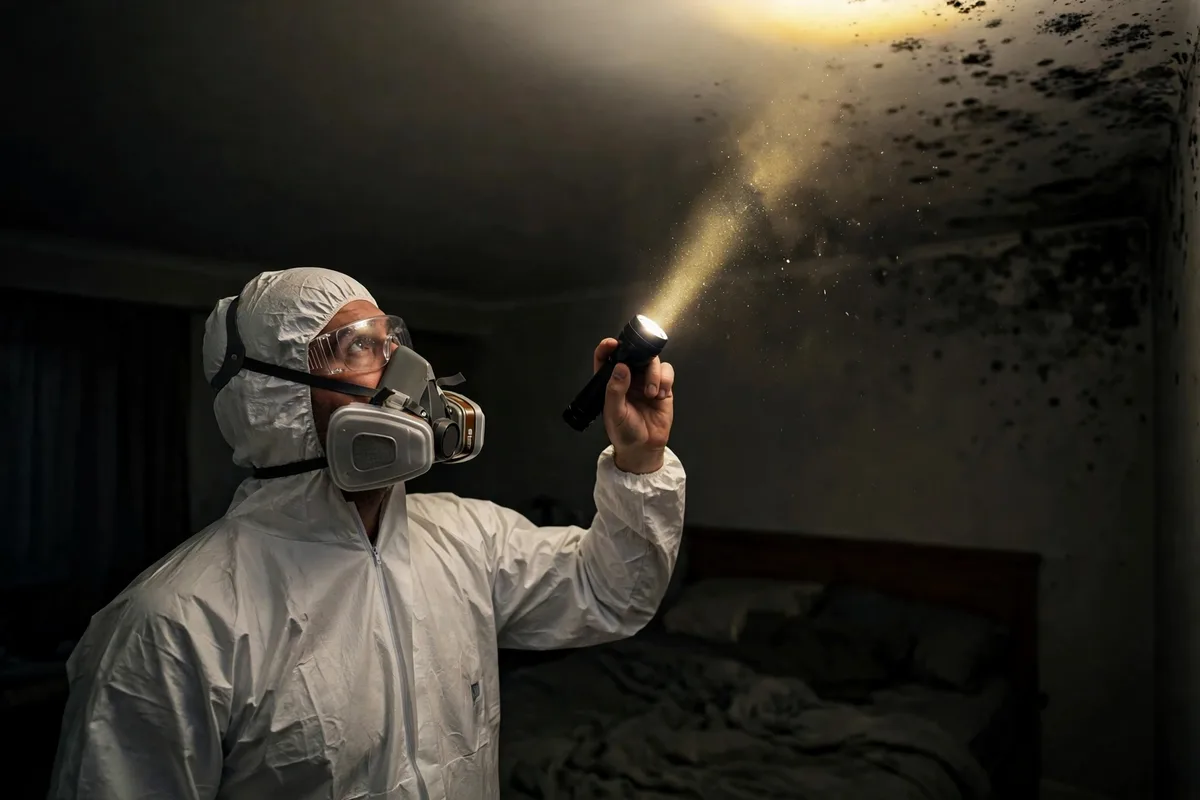
Some jobs are easier from somewhere else. When growth runs through several rooms, when the only bathroom or the kitchen sits inside the work area, or when the crew has to open walls in the rooms you sleep in, staying means living around noise, dust, and sealed-off doorways for days. Many families in that spot stay with relatives or book a nearby room for the noisiest stretch and come back once the barriers are up and the air is clear.
Health changes the answer too. If someone in the house has asthma, a breathing condition, or a weak immune system, talk with the crew lead before the job starts. The containment keeps spores inside the work area, but a household member who reacts strongly to mold may still feel better staying elsewhere until the clearance testing is done and the room is open again.
After a flood or a burst pipe, the job often starts fast, and emergency mold removal covers the first steps while water is still standing and the rooms are still wet.
How Containment Keeps the Rest of Your Home Safe
Containment is the part that makes staying possible. The crew tapes plastic sheeting over every doorway and vent leading into the work area, sealing the room off from the rest of the house. A zippered door lets the crew pass through without opening the whole barrier. The air filtration machine runs the entire time, pulling air in through a filter and sending it outside through a hose, so the pressure inside the sealed room stays lower than the pressure outside it. Air flows into the room, not out of it.
The crew also covers the floor outside the doorway with protective sheeting and wipes down tools and boots when they leave the contained area. You help by keeping the sealed doors closed, keeping the heating and cooling system off in the work area if the crew asks, and keeping children and pets out of the room. The system works when everyone treats the barrier as a wall, not a curtain.
| Situation | Staying works when | Leaving is easier when |
|---|---|---|
| One room sealed off | You can live in the other rooms and avoid the work area | The sealed room is the only bathroom or kitchen |
| Growth in several rooms | The crew seals each area and you keep clear of all of them | The noise and sealed doorways cover most of the house |
| Someone at home has asthma or breathing trouble | The crew seals the area and the person stays well clear of it | A doctor or the crew lead advises time away |
| Growth spread through walls or ducts | The containment holds and the rest of the house stays usable | The job is loud, dusty, and spans several rooms |
What Daily Life Looks Like While the Crew Works
Expect noise. Air filtration machines hum all day, and removal work involves cutting, scraping, and vacuuming. The crew usually works during the day and leaves the machines running overnight to keep filtering the air. If you work from home, set up in the room farthest from the work area, or plan calls around the loudest hours.
Expect some dust outside the barriers too, even with careful containment. The crew cleans as they go, and the final cleanup covers the rooms next to the work area. Keep closet doors near the work area closed, and move anything you use daily, chargers, medicines, the coffee maker, out of the sealed rooms before the crew arrives.
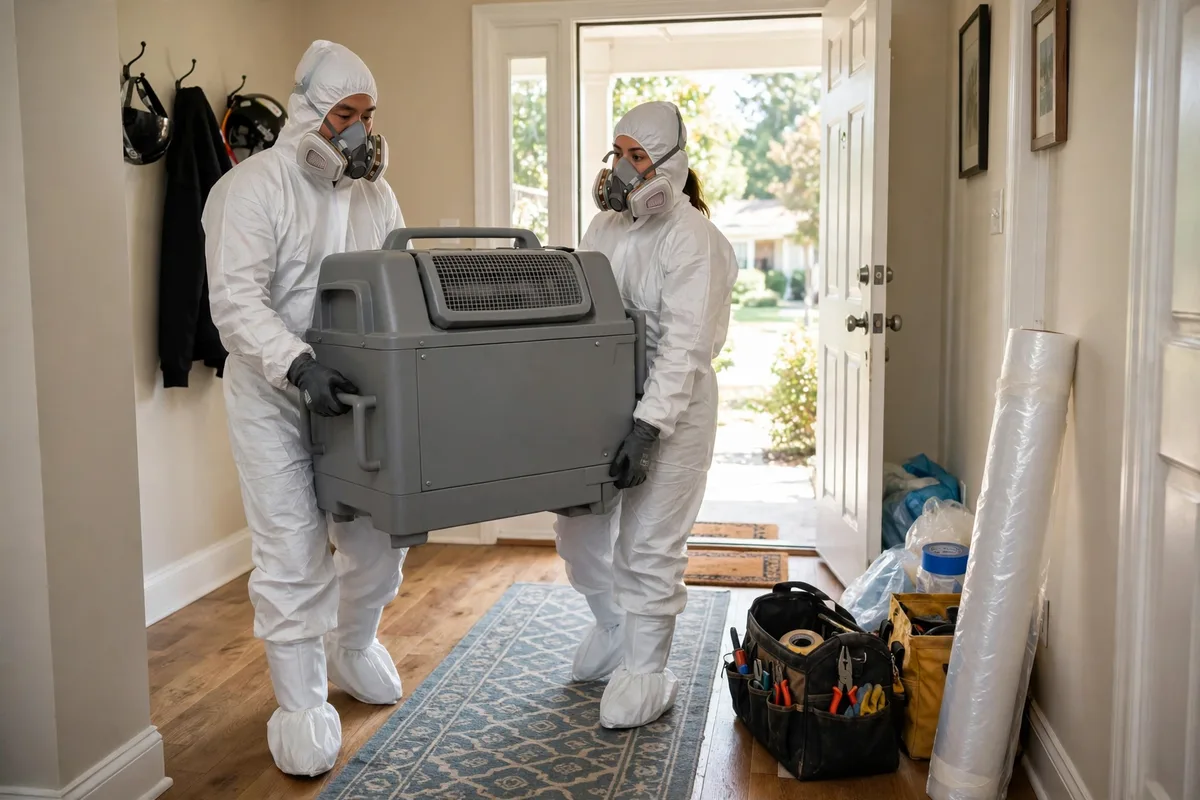
Once the growth is out, the room has to dry fully before anything goes back. Dehumidifiers and moisture control keep the space dry while it airs out, and the crew checks moisture readings before the barriers come down.
Children, Pets, and Family Members With Breathing Issues
Children and pets stay out of the work area, the same as adults, and the crew keeps the barriers zipped when they are not passing through. Pets do best in a room far from the noise, or with a neighbor for the day, since the machines and the coming and going upset them more than the mold does.
The people who need the most care are the ones whose breathing already struggles. If anyone in the house deals with asthma or allergy-like symptoms that flare up at home and ease elsewhere, tell the crew lead before work starts. That pattern helps the crew plan the safest setup for your household.
What to Pack if You Decide to Stay Somewhere Else
If you leave for a few days, pack like you are staying with family for a long weekend: clothes, toiletries, medicines, chargers, work gear, and anything the kids need for school. Take soft items out of the rooms near the work area too. Bedding, curtains, and clothes pick up dust and odors easily, and they are simpler to wash at a relative's house than to clean after the job.
Before you go, walk through the house with the crew lead. Point out anything fragile, anything that cannot move, and anywhere the crew should not go. Leave a key or a code if the crew needs access while you are away, and agree on a daily check-in so you know how the job is progressing.
If you are still deciding whether the job is big enough to leave for, a mold inspection maps the growth and the moisture behind it, so the decision rests on what is actually there instead of a guess.
Moving Back In: The Clearance Check That Ends the Job
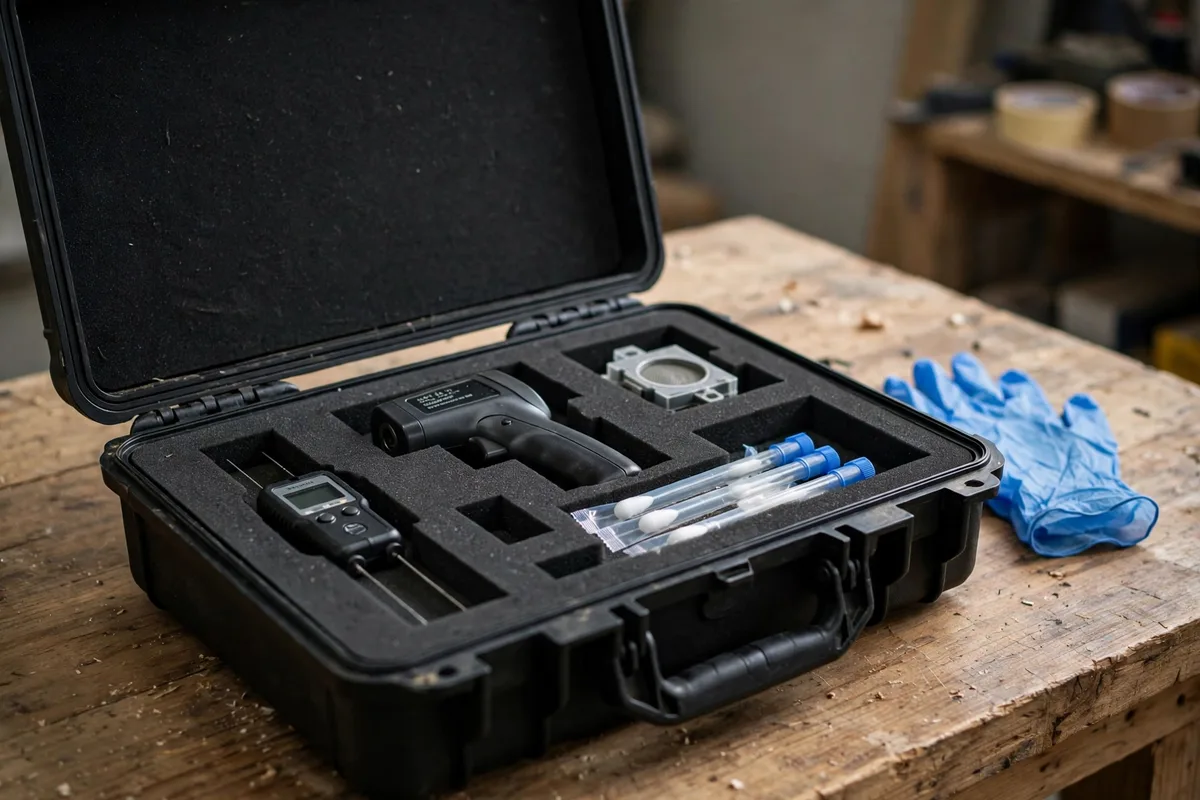
The job is not over when the last board goes back on the wall. The crew cleans the work area, dries it fully, and then runs a clearance check to confirm the room is ready to use again. Only when that check passes do the barriers come down and the furniture go back.
Until then, keep the room closed off and resist the urge to move things back early. A room that looks clean can still hold moisture in the framing, and damp framing grows mold again. Your crew lead will tell you the day the room is ready. That is the day to move back in, not before.
Read how the clearance check at the end of the job works and what it looks for before the barriers come down.
Staying home during remediation works when the job is contained, the household knows the plan, and everyone treats the sealed rooms as off limits. When the growth is wide, the rooms you need are inside the work area, or someone at home breathes with difficulty, a few days elsewhere is the calmer choice. Either way, the clearance check at the end is what decides when the house is fully yours again.